Media Library Tools

The plugin allows users to quickly Rename Media File and update image titles, ALT text, captions, descriptions and categories for individual or bulk images in the media library. And also allows to SVG Support, CSV Export/Import Search Rubbish File.

Media Library Tools provides the website with advantages for improving organization and SEO scores..

Media library tools icon

CSV Export Import

The CSV export/import feature in WordPress media library tools streamlines media asset management. It enables users to export media data to a CSV file, facilitating structured representation of titles, descriptions, and metadata.

This feature supports migration, and bulk operations. Importing from CSV ensures seamless media asset transfer. It's invaluable for WordPress users handling extensive media content across websites.

Image Rabbis

Find Used - Unused Media

Why It Matters: Over time, your WordPress media library fills with unused images that waste disk space, bloat backups, and slow site performance. Manually finding unused media files across posts, pages, custom fields, and page builders is nearly impossible.

Scan & Delete Unused Media Files Safely: Media Library Tools auto-scans every attachment and detects usage in post content, featured images, Elementor, ACF/CMB2, builder JSON, and WP options — sorting results into Used, Unused, and Trash tabs to clean up safely.

View & Manage EXIF Data in WordPres

Why It Matters: Photos uploaded to WordPress carry hidden EXIF metadata like camera model, GPS location, and capture date — exposing privacy risks and bloating image file sizes that hurt page speed and SEO rankings.

Read, Sort & Strip EXIF Metadata Easily:  EXIF data in the media modal, adds sortable Camera, Date Taken, and Dimensions columns, scans your library in batches, and lets you remove EXIF from JPEGs in one click — with Pro auto-stripping GPS on upload.

Image Rabbis

Find Unused/Junk/Rubbish Media

Finding unused or rubbish image files in the media library is essential for efficient website management. Removing unnecessary files improves site performance, load times, and user experience.

It also optimizes storage space and ensures search engines prioritize relevant content, positively impacting SEO rankings. Regular cleanups maintain a well-organized media library and enhance overall website functionality.

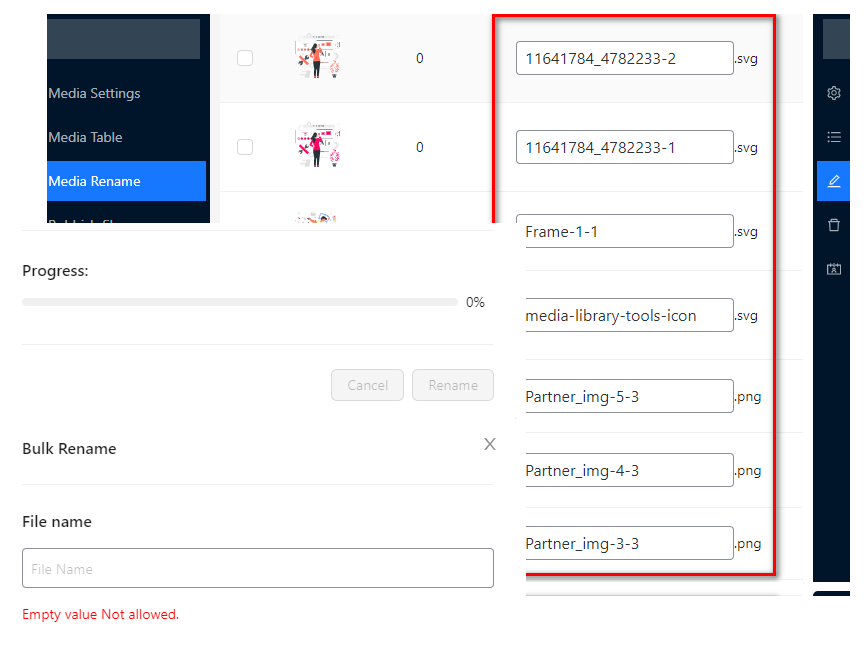
Bulk Rename Media File Manually Base on Custom Text

Well-named media files enhance user experience, improving engagement and reducing bounce rates. Organized filenames make it easier for users to find and share the content, ultimately driving more organic traffic to the website.

Optimizing media file names provides valuable SEO benefits. By using descriptive and keyword-rich filenames, search engines can better understand the content, leading to higher rankings and increased visibility.

Bulk Rename

Bulk Rename Media File Based on Associated Post Title

This is a valuable feature that streamlines media file management by automatically renaming them according to associated post titles. This enhances organization, SEO, and user experience, saving time and effort for site administrators.

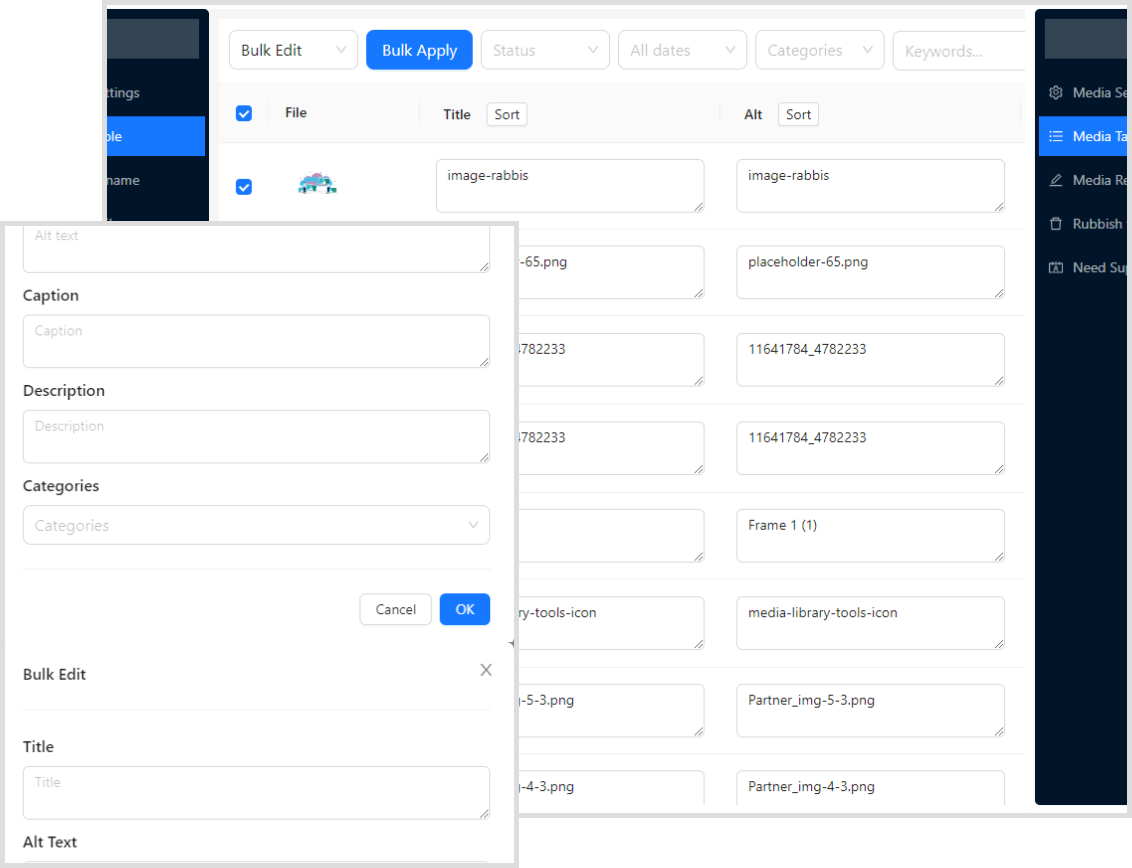
Bulk Add Media Content, Title, Alt text, Caption, And Description. Based on Associated Post Title

Bulk editing media content based on associated post titles offers streamlined management, saving time and ensuring accurate, SEO-optimized metadata. This enhances website organization and elevates the user experience, all within a user-friendly interface.

Bulk Edit Media Content

Bulk Add Media Content, Title, Alt text, Caption, And Description. Based on Custom Text

The plugin allows users to quickly update  Media File titles, ALT text, captions, descriptions and categories for individual or bulk images in the media library.

Media Library Tools provides the website with advantages for improving organization and SEO scores..

Image SVG Support

You can simply upload SVG images to your media library like any other file. Upload SVG files to your media library and use them like any other image. Just Configure the settings. 

Support Svg

Custom Image Sizes

Define custom image sizes (width, height, crop) that WordPress generates on every upload

Reduce storage waste by generating only the sizes your theme actually uses

Merge Duplicate Files

In the duplicate group, click Merge, select the copy you want to keep, and confirm. media library  plugin deletes all other copies and automatically updates every reference to them — in post content, excerpts, featured images, Elementor data, and custom post meta — to point to the kept copy. Your site continues to work without any broken images.


Permanently delete trash images with one click.

Move Images to Trash

When managing your media files, consider moving images to the trash instead of deleting them permanently. This allows for a safety net in case you need to recover them later.

Permanently Delete Trash Images With One Click.

Easily free up space by permanently deleting all trash images in just one click. Streamline your media library management with this efficient feature.

Move images to trash

Pricing

Explore our Premium Plan for a better web experience. Enjoying the free version ?
Share your feedback or report any issues you’ve solved.

  • Premium Plan
  • All Free Features Included
  • Merge Duplicate Files
  • Auto Rename on Upload
  • Media File CSV Export/Import
  • Register/Add New Custom Image Sizes as Needed
  • Rubbish File Restoration
  • Bulk Delete Junk/Unused Files
  • Rename Based on Woo Product SKU
  • Media File Auto Rename by Custom Text
  • Media File Bulk Renaming Based on Associated Post Title
  • Bulk Assign Alt Text Based on Associated Post Title
  • Bulk Assign Caption Based on Associated Post Title
  • Bulk Assign Description Based on Associated Post Title
  • Automatically assign title, alt text, caption, and description based on the associated post title when uploading a media file
  • $49.99 $34.99 / Annual $99.99 $89.99 / Lifetime
    $79.99 $49.99 / Annual $199.99 $119.99 / Lifetime
    $129.99 $79.99 / Annual $299.99 $149.99 / Lifetime
    $199.99 $99.99 / Annual $499.99 $249.99 / Lifetime
    $299.99 $149.99 / Annual $899.99 $449.99 / Lifetime

Frequently Asked

At Tiny Solutions, we pride ourselves on not only delivering high-quality plugins but also ensuring that they align seamlessly with the unique needs and goals of our clients. 

Test Page

30-Days Money Back Guarantee

You are fully protected by our 100% Money Back Guarantee. If during the next 30 days you experience an issue that makes the plugin unusable and we are unable to resolve it, we'll happily consider offering a full refund of your money.

Please note that if you change your mind without a qualifying reason under our refund policy, a refund will not be processed.

FAQ

Media Library Tools allows you to bulk rename all your media files at once, which is crucial for SEO since search engines index your filenames.

In the free version, you can navigate to the Media Library and click the Renamer tab, then select files you want to rename and choose a naming pattern such as sequential, with date prefix, or custom format. Simply click Apply to rename all selected files instantly.

The Pro version offers even more advanced options including bulk rename by post title, which automatically names images after their parent post title (for example, “my-blog-post-1.jpg”), bulk rename by SKU which is perfect for e-commerce sites where you can rename product images by their SKU code, bulk rename by alt text to use existing alt text as filenames for consistency, and auto-rename on upload so new images automatically follow your naming rules when uploaded.

Descriptive filenames with keywords help search engines understand your images and improve your chances of ranking in Google Images search, while also providing a better user experience when images are downloaded.

Alt text is one of the most important SEO factors for images, and Media Library Tools lets you bulk edit all image metadata efficiently.

To do this, go to your Media Library, click on the Renamer tab, and select multiple images. You can then use the bulk edit form to update alt text which is most important for accessibility and SEO, title which appears on hover, caption which appears below images, and description which serves as internal notes.

You have the option to choose whether to replace or append existing values before clicking Apply to update all images at once. A pro tip is to use the AI feature to auto-generate alt text and descriptions from image content, and in the Pro version you can enable Auto Alt Text to automatically inject missing alt text on your frontend using post titles or filenames as fallback.

Alt text is required for image accessibility and WCAG compliance, Google uses alt text to understand image content, keyword-rich alt text can improve your SEO rankings, and proper alt text helps with featured snippet optimization.

Yes, both the free and pro versions include AI-powered image analysis that automatically generates descriptions and alt text.

The free version allows you to generate alt text and descriptions for individual images using ChatGPT, Google Gemini, or Claude, while the Pro version includes all free features plus auto alt text on the frontend which automatically injects missing alt text on your website using post titles or filenames as fallback, the ability to get up to 10 AI suggestions instead of just 1 in the free version, and faster processing for bulk operations.

To use this feature, select an image in the media library and click the AI Generate button, then choose your AI provider such as ChatGPT, Gemini, or Claude. Review the generated suggestions and apply the best one to your image. In the Pro version, you can configure this in settings by enabling Auto Inject Alt Text to automatically add missing alt text on the frontend, choosing whether to use post title as alt text or filename as fallback, and setting a default alt text for images without a parent post.

This approach ensures every image has proper descriptive alt text, saves hours of manual work, maintains consistent alt text across your site which improves SEO performance, and provides better accessibility for all users.

Orphaned or “rubbish” files, which are images not attached to any post, waste hosting space and can hurt your site performance.

Media Library Tools includes a Rubbish File Finder to identify and clean them up efficiently. In the free version, you can go to the Media Library and click on the Rubbish tab, then click Start Scanning to scan your uploads directory and view all files not linked to any post, post type, or custom field.

You can filter by file type such as images, documents, or videos, and see the estimated storage space each file uses. The Pro version goes further by allowing you to delete unwanted files individually, remove multiple files at once with confirmation, mark files to skip in future scans with an ignore list, and recover accidentally deleted files through a restore feature. The scanning works by checking your uploads directory against all posts, pages, and custom post types while detecting images in custom post meta, ACF fields, WooCommerce, Elementor, and other locations, with excluded images able to be marked as ignored.

A faster website leads to better SEO rankings, a smaller hosting footprint reduces costs, a cleaner media library improves organization, and reducing potential security vulnerabilities is an important added benefit.

Duplicate images waste storage and confuse your media library, and the Duplicate File Finder uses MD5 hashing to identify exact duplicates and merge them.

In the free version, you can go to the Media Library, click on the Duplicate tab, and click Start Scanning to begin MD5 hash scanning. You’ll then see all duplicate groups with the number of duplicates in each group, the potential storage savings if merged, and file sizes and details.

The Pro version allows you to merge duplicates by keeping one image and deleting the rest, auto-update references automatically across all posts, pages, and custom fields to use the kept image, and handle references in post content and excerpts, featured images, Elementor page builder data, custom post meta fields, and WooCommerce product galleries.

To merge duplicates, you select a duplicate group, choose which image to keep, and click Merge, after which the plugin automatically deletes duplicate images, updates all references across your site, and frees up storage space. Since site speed is a Google ranking factor, reducing storage improves site performance, a better organized media library makes management easier, eliminating duplicate image URLs prevents indexing confusion, all of which contribute to better SEO.

The Used-Where Image Tracker, also known as the Image Usage Finder, shows you exactly where each image is used on your site. In the free version, you can go to the Media Library and click on the Used Where tab, then click Start Scanning to analyze your site.

You’ll see all images organized by usage including featured images that are set as post thumbnails, images embedded in post content, images in custom meta fields like ACF and CMB2, images in page builders such as Elementor and Gutenberg, images in WordPress options like theme and plugin settings, unused images that are never used anywhere and are good cleanup candidates, and trashed images that you’ve moved to trash.

The Pro version includes frontend suppression functionality that automatically suppresses trashed images on your frontend so they won’t display on your website even if content references them, which prevents broken images and 404 errors.

The usage detection includes featured images on posts, pages, and custom post types, images in post and page content, Elementor page builder data, Gutenberg blocks, WooCommerce product galleries and images, ACF galleries, CMB2 custom meta, and WordPress settings and options for themes and widgets. Understanding your image SEO strategy is important, identifying broken image references before users do prevents problems, cleaning up images properly without breaking links maintains site integrity, better site maintenance equals better user experience, and preventing orphaned media helps site performance.

The CSV Import/Export feature, which is Pro only, lets you manage your entire media library programmatically. To export to CSV, go to the Media Library and click on the Export tab, select the images you want to export, choose which fields to include such as filename, alt text, title, caption, description, URL, post parent, and more, and download the file as a CSV that you can then edit in Excel, Google Sheets, or any spreadsheet tool.

To import from CSV in the Pro version, go to the Media Library and click on the Import tab, upload your CSV file, configure the mappings to connect CSV columns to WordPress fields, and choose your action to either create new attachments or update existing ones before bulk importing up to 1000 or more images at once.

Common use cases include bulk updating alt text for 1000 or more images, importing images from another WordPress site, migrating from other platforms such as Shopify or WooCommerce, managing product images with SKU data, and updating captions and descriptions programmatically. Bulk SEO fixes that would normally take hours can now be done in minutes, you can ensure consistent metadata across all images, it’s easier to implement SEO best practices at scale, and it’s perfect for e-commerce sites with hundreds of product images while also facilitating site migrations without losing image metadata.

WordPress generates multiple image sizes automatically, which can slow down your site, and the Image Size Manager lets you disable unnecessary sizes. To use this feature, go to Media Settings and click on the Image Sizes tab to see all registered image sizes including thumbnail, medium, large, and custom sizes.

You can disable unused sizes to stop WordPress from generating them, and in the Pro version you can also register custom sizes to define new image sizes for your theme. Sizes are disabled going forward and existing files aren’t deleted, so if you optimize by disabling sizes you don’t use such as disabling unnecessary sizes when you only display medium images, the result is faster image generation, smaller hosting storage, and a faster site overall.

Image generation time is part of page load speed, and since site speed is a confirmed Google ranking factor, reducing the number of image sizes matters significantly. Additional benefits include faster uploads, better performance on mobile devices, and reduced server CPU usage.

Media Library Tools includes cron job scheduling to automatically scan and maintain your media library. In the free version, you can run scans at WordPress’s built-in schedule, auto-detect and log rubbish files, and enable automatic thumbnail regeneration if needed.

The Pro version offers advanced functionality including custom cron times so you can schedule scans for off-peak hours such as 2 AM, automatic rubbish detection that runs on your schedule, email notifications to get alerted when rubbish files are found, and no manual work since the plugin handles everything automatically.

To set this up, go to Media Settings, enable the cron jobs you want, set your preferred time and frequency, and the plugin handles the rest automatically. Regular maintenance keeps site performance optimal since a faster website provides better SEO rankings, automatic cleanup prevents storage bloat that could slow your site, consistent site speed ensures consistent SEO performance, less manual work means more time for content creation, and proactive management prevents issues before they happen.

For WooCommerce stores, proper image naming and optimization is critical for product discoverability, and Media Library Tools is perfect for e-commerce businesses.

The Pro version includes bulk rename by SKU which allows you to organize product images by SKU for easy management, improves product image findability, and helps with inventory management.

The CSV import and export feature lets you import hundreds of product images with metadata, update product galleries in bulk, and manage images across multiple products at once. AI alt text generation helps by auto-generating product descriptions and alt text, ensuring every product image has SEO-optimized metadata, and improving Google Images visibility for your products. Image size optimization through the plugin helps you disable unnecessary sizes to improve product page load speed, enables faster product page loading which leads to better conversions, and is critical for mobile optimization.

The duplicate detection feature helps you find and merge duplicate product images, prevent confusion in product galleries, and save storage space on product images. A typical workflow might involve uploading 500 product images, using CSV Import to bulk assign metadata by SKU, using AI Generation to create product descriptions, using the Duplicate Finder to identify swapped uploads, using the Image Size Manager to optimize for mobile, and using Schedule Scans to keep everything clean.

Product images are indexed by Google Images which improves organic traffic opportunities, rich image optimization improves overall discoverability, mobile shoppers expect fast-loading images, proper alt text helps with product discovery, and better images lead to higher conversion rates.


Install Media Library Tools, open the Used Where page, and run a scan to list every image not used in posts, pages, or templates.

Yes. The plugin moves files to Trash first, so you can restore them before permanent deletion.

Open any JPEG in the media modal and click Remove EXIF Data, or run a batch scan to clean your full library.
No. Only metadata is stripped; the visual image stays sharp and high quality.
Scroll to Top